
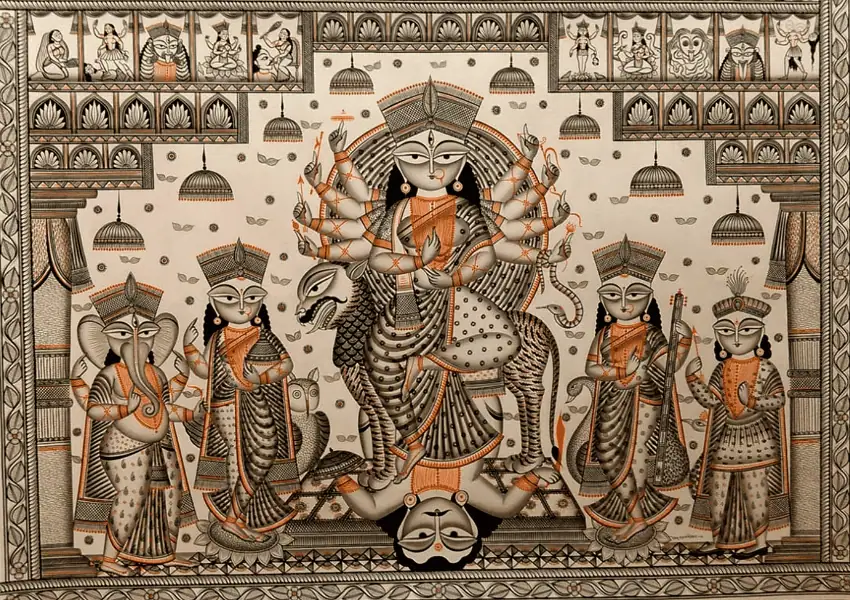
Sharad Navratri, also known as Sharadiya Navratri or Shardiya Navratri, is one of the most important periods of Devi worship in the Hindu calendar. It is traditionally observed during the lunar month of Ashwin and is dedicated to the worship of Maa Durga and the divine feminine Shakti.
The nine nights of Sharad Navratri are traditionally associated with the nine forms of Maa Durga, known as Navadurga. Devotees observe prayers, Puja, fasting, Mantra chanting, Havan and other devotional practices during these sacred days. The nine-day observance is followed by Vijayadashami on the tenth day.
This guide explains the significance of Sharad Navratri, the nine Navratri days and their forms of Maa Durga, commonly associated Mantras, Puja Vidhi, fasting, Ghatasthapana, Havan, and how Maa Baglamukhi can be worshipped during Navratri.
What Is Sharad Navratri?
Sharad Navratri is the Navratri observed during Sharad Ritu, the autumn season. The name Sharad Navratri comes from this seasonal association, while it is also commonly called Sharadiya or Shardiya Navratri.
The festival is observed for nine nights and is centered on the worship of Goddess Durga and her various forms. In the commonly followed North Indian tradition, each of the nine days is associated with one form of Navadurga, beginning with Maa Shailaputri and ending with Maa Siddhidatri.
Sharad Navratri is a time for devotional worship, prayer, fasting, spiritual discipline and remembrance of Maa Durga. Many devotees also perform Ghatasthapana at the beginning of Navratri and continue daily worship throughout the nine days.
When Is Sharad Navratri Celebrated?
Sharad Navratri begins on Pratipada of the Shukla Paksha of the Ashwin lunar month. Because it follows the Hindu lunar calendar, the Gregorian dates change every year.
The exact dates and Puja timings should therefore be checked for the particular year and location.
For example, the 2026 Sharad Navratri observance begins with Ghatasthapana on October 11, 2026, while the 2027 observance begins on September 30, 2027.
The 9 Days of Sharad Navratri
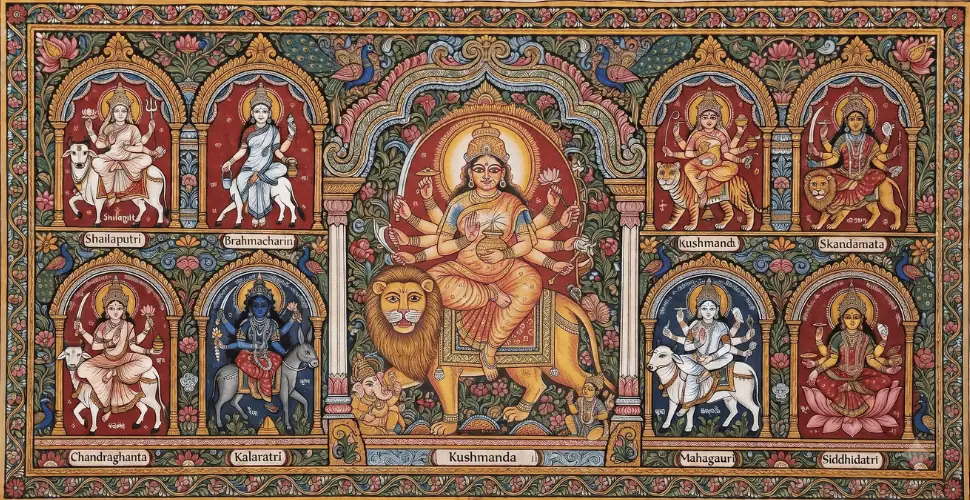
The nine days of Sharad Navratri are traditionally dedicated to the nine forms of Maa Durga known as Navadurga. The commonly followed sequence is:
| Navratri Day | Goddess | Form of Navadurga |
|---|---|---|
| Day 1 | Maa Shailaputri | Shailaputri |
| Day 2 | Maa Brahmacharini | Brahmacharini |
| Day 3 | Maa Chandraghanta | Chandraghanta |
| Day 4 | Maa Kushmanda | Kushmanda |
| Day 5 | Maa Skandamata | Skandamata |
| Day 6 | Maa Katyayani | Katyayani |
| Day 7 | Maa Kalaratri | Kalaratri |
| Day 8 | Maa Mahagauri | Mahagauri |
| Day 9 | Maa Siddhidatri | Siddhidatri |
Regional traditions can differ in the forms of Devi worshipped during Navratri, so day-wise practices and associated customs may vary between communities.
Day 1 – Maa Shailaputri
The first day of Navratri is traditionally dedicated to Maa Shailaputri, the first form of Navadurga.
Devotees begin Navratri by seeking the blessings of Maa Shailaputri through prayer, Puja and Sankalp for the days ahead.
Mantra: ॐ देवी शैलपुत्र्यै नमः॥
Day 2 – Maa Brahmacharini
The second day is dedicated to Maa Brahmacharini. She is associated with devotion, spiritual discipline and determination.
Mantra: ॐ देवी ब्रह्मचारिण्यै नमः॥
Day 3 – Maa Chandraghanta
The third day is dedicated to Maa Chandraghanta. Devotees worship her with prayers and offerings while seeking peace, strength and divine protection.
Mantra: ॐ देवी चन्द्रघण्टायै नमः॥
Day 4 – Maa Kushmanda
The fourth day is dedicated to Maa Kushmanda.
Devotees offer prayers and traditional offerings to Maa Kushmanda and seek her blessings for wellbeing, strength and prosperity.
Mantra: ॐ देवी कूष्माण्डायै नमः॥
Day 5 – Maa Skandamata
The fifth day is dedicated to Maa Skandamata, who is worshipped as the mother of Lord Skanda.
Devotees pray to her for divine grace, peace and the wellbeing of their families.
Mantra: ॐ देवी स्कन्दमात्रे नमः॥
Day 6 – Maa Katyayani
The sixth day is dedicated to Maa Katyayani.
Her worship is an important part of Navratri devotion, and devotees offer prayers and traditional offerings seeking the blessings of the Goddess.
Mantra: ॐ देवी कात्यायन्यै नमः॥
Day 7 – Maa Kalaratri
The seventh day is dedicated to Maa Kalaratri.
Devotees worship Maa Kalaratri with faith and devotion and seek divine protection and courage.
Mantra: ॐ देवी कालरात्र्यै नमः॥
Day 8 – Maa Mahagauri
The eighth day is dedicated to Maa Mahagauri.
This day is also widely observed as Durga Ashtami, although the exact observances can vary according to the Panchang and regional tradition.
Mantra: ॐ देवी महागौर्यै नमः॥
Day 9 – Maa Siddhidatri
The ninth day is dedicated to Maa Siddhidatri, the ninth form of Navadurga.
Devotees conclude the nine-day worship with prayers, offerings and gratitude to Maa Durga.
Mantra: ॐ देवी सिद्धिदात्र्यै नमः॥
Navratri Day-Wise Mantras
Devotees may chant the traditional Mantras associated with each form of Navadurga during the corresponding day of Navratri.
| Day | Goddess | Mantra |
|---|---|---|
| 1 | Maa Shailaputri | ॐ देवी शैलपुत्र्यै नमः॥ |
| 2 | Maa Brahmacharini | ॐ देवी ब्रह्मचारिण्यै नमः॥ |
| 3 | Maa Chandraghanta | ॐ देवी चन्द्रघण्टायै नमः॥ |
| 4 | Maa Kushmanda | ॐ देवी कूष्माण्डायै नमः॥ |
| 5 | Maa Skandamata | ॐ देवी स्कन्दमात्रे नमः॥ |
| 6 | Maa Katyayani | ॐ देवी कात्यायन्यै नमः॥ |
| 7 | Maa Kalaratri | ॐ देवी कालरात्र्यै नमः॥ |
| 8 | Maa Mahagauri | ॐ देवी महागौर्यै नमः॥ |
| 9 | Maa Siddhidatri | ॐ देवी सिद्धिदात्र्यै नमः॥ |
The Navadurga tradition includes prayers and Stotram dedicated to the nine forms of Devi, and Navadurga Stotram is traditionally chanted in connection with their worship.
Maa Baglamukhi Day in Navratri
One question devotees often ask is:
Which day is for Maa Baglamukhi in Navratri?
Maa Baglamukhi does not have a universally assigned day among the nine Navadurga days of Sharad Navratri.
The nine days traditionally correspond to the nine forms of Navadurga, while Maa Baglamukhi belongs to the tradition of the Ten Mahavidyas.
Therefore, she should not be presented as the tenth or one of the nine Navadurga forms simply to fit the Navratri calendar.
Can Maa Baglamukhi Be Worshipped During Navratri?
Yes. Devotees may worship Maa Baglamukhi during Navratri as part of their devotional practice.
Navratri is a significant period of Devi worship, and devotees may choose to offer prayers to particular forms of the Divine Mother according to their family tradition, spiritual practice, Sankalp or guidance from their Guru.
Maa Baglamukhi has her own distinct Mahavidya tradition and worship practices.
Learn more about Maa Baglamukhi and her traditional worship.
Which Day Can Maa Baglamukhi Be Worshipped During Navratri?
There is no universally accepted rule that assigns Maa Baglamukhi to one particular day of the nine-day Sharad Navratri sequence.
If a devotee wishes to worship Maa Baglamukhi during Navratri, the appropriate day and method can depend on their devotional tradition, Sankalp and guidance.
Devotees can also perform or participate in Maa Baglamukhi Puja or Havan during Navratri as a dedicated form of Devi worship.
Significance of Sharad Navratri
Sharad Navratri is a period of devotion, prayer and spiritual observance dedicated to Maa Durga and Shakti.
Traditional accounts connect Sharad Navratri with the victory of Goddess Durga over Mahishasura, representing the triumph of divine power over the forces of adharma. Other traditions also connect Sharad Navratri with Lord Rama’s worship of Goddess Durga before his battle with Ravana.
For devotees, the nine days provide an opportunity to:
- Offer daily prayers to Maa Durga
- Observe fasting or dietary discipline
- Chant Devi Mantras
- Perform Puja and Havan
- Read devotional texts and Stotram
- Practice charity and seva
- Maintain spiritual discipline
- Make a personal Sankalp
The way Navratri is observed can differ according to region, family tradition and sampradaya.
Ghatasthapana During Sharad Navratri
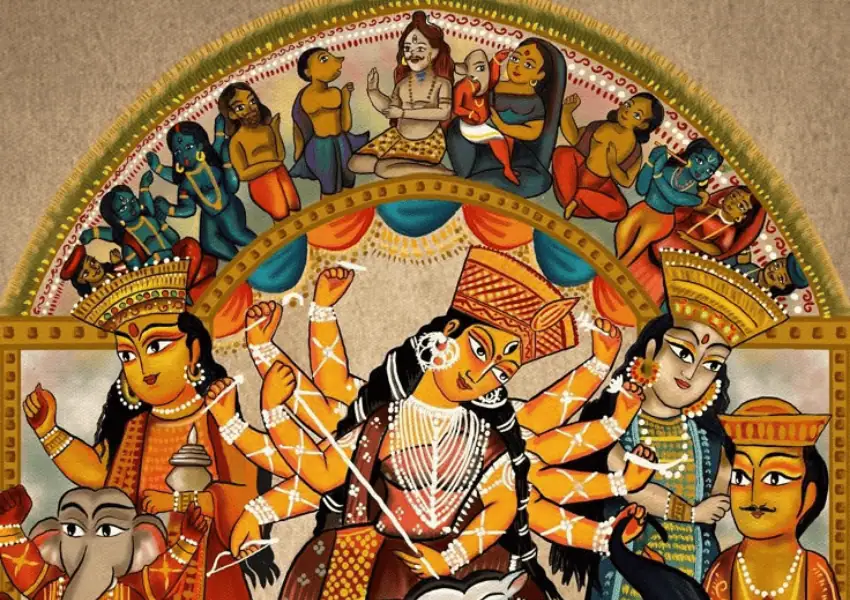
Ghatasthapana, also known as Kalash Sthapana, marks the beginning of Navratri worship for many devotees.
A Kalash is traditionally established in the Puja area, followed by prayers and invocation of the Divine Mother. Barley or other sacred grains may also be sown as part of the traditional observance.
The exact Ghatasthapana Muhurat changes each year and should be checked according to the local Panchang. Therefore, the annual Sharad Navratri page should be used for the exact date and timing rather than relying on a fixed time on this evergreen guide.
Sharad Navratri Puja Vidhi
A simple home observance of Sharad Navratri can include the following steps:
- Clean the Puja space and prepare a peaceful worship area.
- Establish the Kalash according to your family tradition, if performing Ghatasthapana.
- Place an image or Murti of Maa Durga.
- Light a Diya and offer flowers and traditional Naivedya.
- Offer prayers to the form of Devi associated with that day’s Navratri worship.
- Chant the appropriate Devi Mantra.
- Read or listen to devotional Stotram, Chalisa or other sacred texts.
- Perform Aarti.
- Offer your personal prayers and Sankalp.
- Conclude the worship with Prasad.
Those following a particular family or Guru tradition should follow that established method.
Navratri Fasting and Food
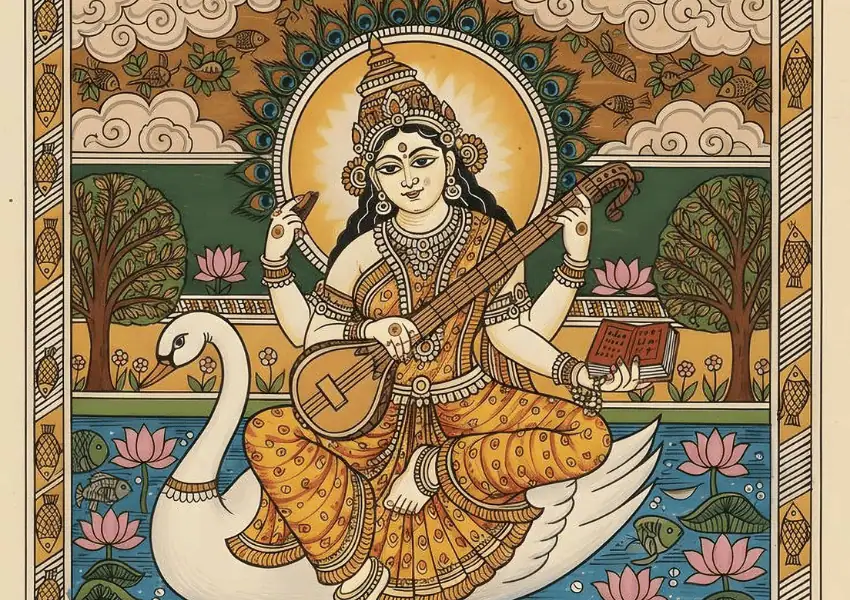
Many devotees observe a fast during Sharad Navratri, while others follow a sattvik dietary routine without observing a complete fast.
Fasting practices vary significantly by region and family tradition. Common Navratri foods may include fruits, milk, certain root vegetables, Samak rice, Sabudana and preparations made with permitted fasting ingredients.
If you are observing a traditional fast, follow the dietary rules appropriate to your family tradition and personal circumstances.
How to Worship Maa Durga During Navratri
Maa Durga can be worshipped during Navratri through simple and sincere devotional practices.
A daily worship routine may include:
- Cleaning the Puja space
- Lighting a Diya
- Offering flowers
- Offering Naivedya
- Chanting the day’s Devi Mantra
- Reading Devi Stotram or other devotional texts
- Performing Aarti
- Offering personal prayers
- Maintaining a peaceful and devotional mindset
The focus of Navratri worship is devotion and remembrance of the Divine Mother rather than the complexity of the ritual.
Sharad Navratri Havan
Havan is a traditional fire ritual performed as an offering during Devi worship.
During Navratri, some devotees perform Havan as part of their worship, particularly toward Ashtami or Navami, depending on their family and regional tradition.
A formal Navratri Havan may involve specific Samagri, Mantras and procedures. Those who are unfamiliar with the ritual may choose to perform a simple home worship or arrange a traditional Puja and Havan with qualified priests.
For devotees who wish to participate in a personalized Maa Baglamukhi Puja or Havan during Navratri, the Sankalp can be performed with the devotee’s name, Gotra and Manokamna according to the chosen service.
How to Observe Sharad Navratri at Home
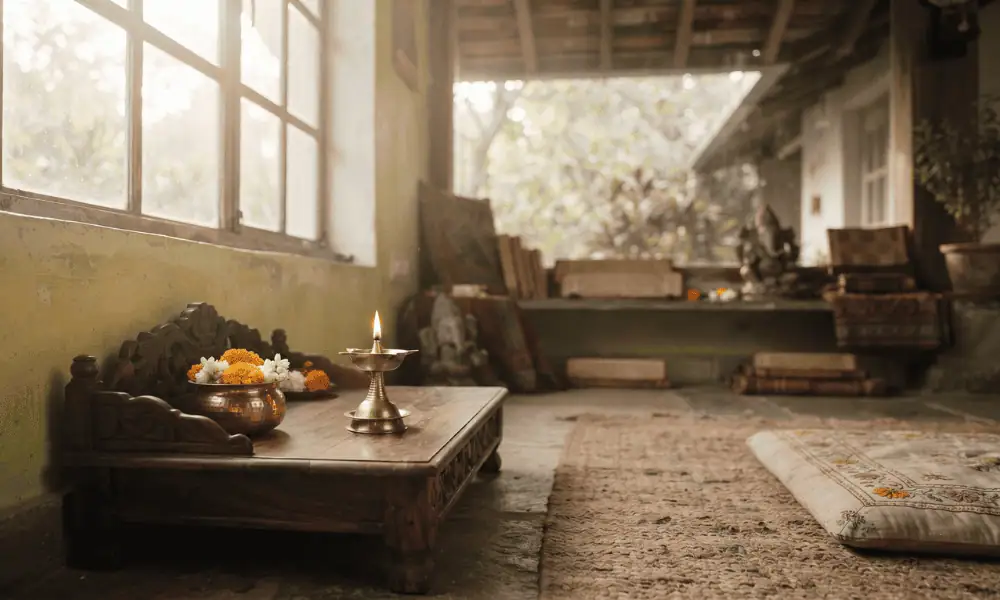
Sharad Navratri can be observed at home through a simple daily devotional routine.
You may:
- Keep the Puja area clean.
- Place an image or Murti of Maa Durga.
- Light a Diya each day.
- Offer flowers and Naivedya.
- Chant the appropriate Navadurga Mantra.
- Read Devi-related devotional texts.
- Perform Aarti.
- Observe fasting or a sattvik diet according to your tradition.
- Offer charity or perform acts of seva.
- Maintain a peaceful and devotional atmosphere.
You do not need to make the home worship unnecessarily complicated. Consistent prayer, devotion and sincere Sankalp are central to personal observance.
Sharad Navratri Colors
The tradition of assigning a particular color to each Navratri day is especially popular in several regions of India.
However, the Navratri colors can change from year to year because some regional calendars associate the daily color with the weekday on which each Navratri day falls.
Frequently Asked Questions
Sharad Navratri is the nine-night festival dedicated to the worship of Maa Durga and the Divine Mother, observed during the Ashwin lunar month in Sharad Ritu. The commonly followed North Indian tradition worships nine forms of Navadurga during the nine days.
Sharad Navratri is celebrated as a period of Devi worship, devotion and spiritual observance. Traditional accounts associate the festival with the victory of Goddess Durga over Mahishasura and with the worship of Goddess Durga by Lord Rama.
Sharad Navratri is observed over nine nights and nine days, followed by Vijayadashami on the tenth day.
The commonly followed nine forms are Maa Shailaputri, Maa Brahmacharini, Maa Chandraghanta, Maa Kushmanda, Maa Skandamata, Maa Katyayani, Maa Kalaratri, Maa Mahagauri and Maa Siddhidatri.
Each day is traditionally associated with one of the nine forms of Navadurga. The exact customs and deity traditions can vary by region and sampradaya.
Each form of Navadurga has traditional Mantras associated with her worship. Devotees may chant the Mantra of the Devi worshipped on that particular day.
Yes. Devotees may worship Maa Baglamukhi during Navratri according to their devotional tradition, Sankalp or spiritual guidance. Maa Baglamukhi belongs to the Ten Mahavidyas and is distinct from the nine Navadurga forms.
There is no universally assigned day for Maa Baglamukhi within the nine Navadurga days of Sharad Navratri. Her worship follows the distinct tradition of Maa Baglamukhi as one of the Ten Mahavidyas.
Devotees may perform or participate in Maa Baglamukhi Puja during Navratri according to their tradition and Sankalp. A personalized Puja can include the devotee’s name, Gotra and Manokamna.
Yes. Devotees can observe Navratri at home through daily prayers, Diya, offerings, Mantra chanting, Aarti and other practices appropriate to their family tradition.
No. Both are Navratri observances, but they occur in different months of the Hindu lunar calendar. Sharad Navratri is observed during Ashwin, while Chaitra Navratri occurs during Chaitra.
Because the dates, Ghatasthapana Muhurat, Ashtami, Navami and other timings change each year, check the current year’s Sharad Navratri calendar for exact dates and local timings.
For the latest dates, see our blog page.