
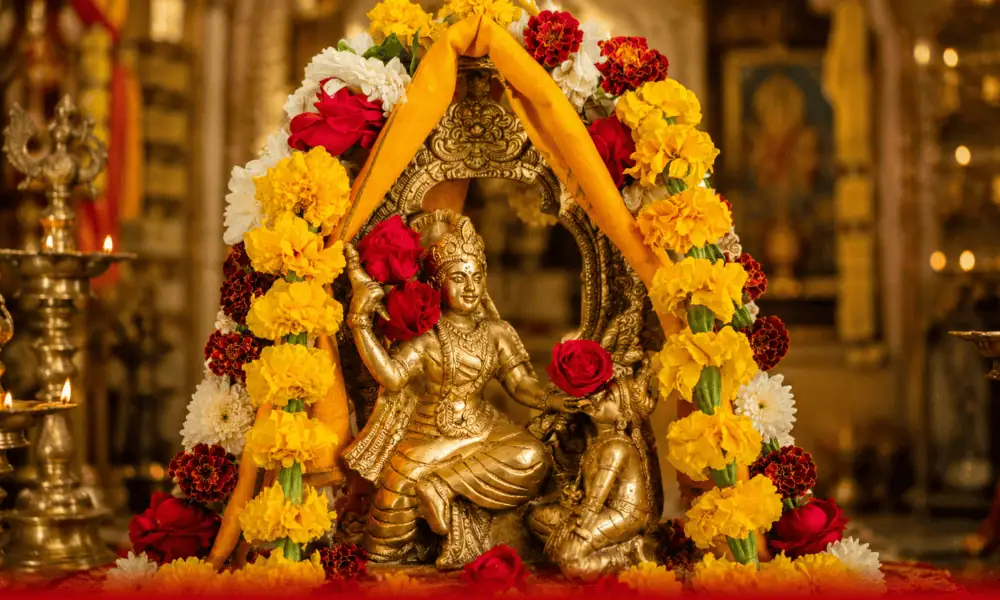
Maa Baglamukhi:
The Goddess of Stillness and Truth
Maa Baglamukhi, also revered as Baglamukhi Mata, Maa Bagalamukhi, Goddess Baglamukhi, Baglamukhi Devi, and Pitambara, is traditionally regarded as one of the ten Mahavidyas within Hindu Shakta traditions.
Her worship is associated with themes of stillness, restraint, focused awareness, protection, and inner steadiness.
Her devotional tradition emphasizes truth, discipline, reverence, and the cultivation of composure in difficult circumstances.
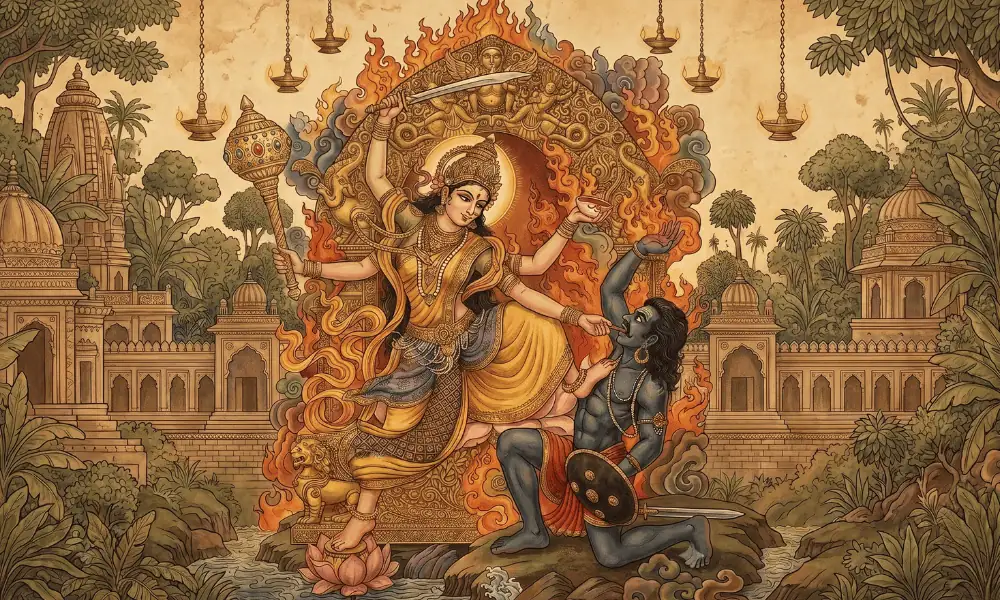
Who Is Maa Baglamukhi?
Maa Baglamukhi is traditionally regarded as the eighth of the ten Mahavidyas—a group of wisdom goddesses representing various aspects of the Divine Mother in the Shakta tradition.
Her tradition is historically and textually associated with protection and the orientation toward overcoming internal and external obstacles.
Maa Baglamukhi is approached within devotional traditions that emphasize spiritual discipline, inner steadiness, and resilience. Her protective aspect is traditionally understood as helping the devotee remain composed in the face of confusion, fear, conflict, and other difficulties.
Meaning and Significance
To understand the context of the Goddess, one can examine the linguistic and philosophical references associated with her name.
One traditional interpretation connects “Bagala” with the Sanskrit Valga, meaning a bridle or curb, while Mukhi relates to the face or mouth. This interpretation is commonly associated with the Goddess’s symbolism of restraint and control.
Esoterically, this points toward the concept of stambhana—commonly understood in devotional and Tantric contexts as restraining or bringing an opposing force to a halt.
In traditional philosophy, devotees may interpret this symbolically in relation to speech, reactions, confusion, and inner disturbances, serving to bring a pause to mental turbulence rather than implying harm to others.
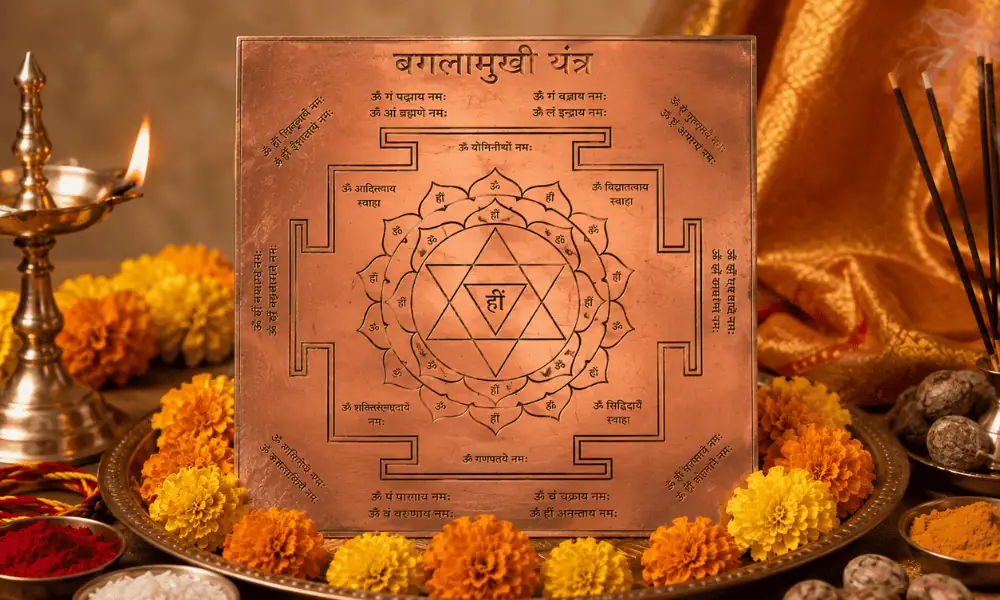
Form and Symbolism
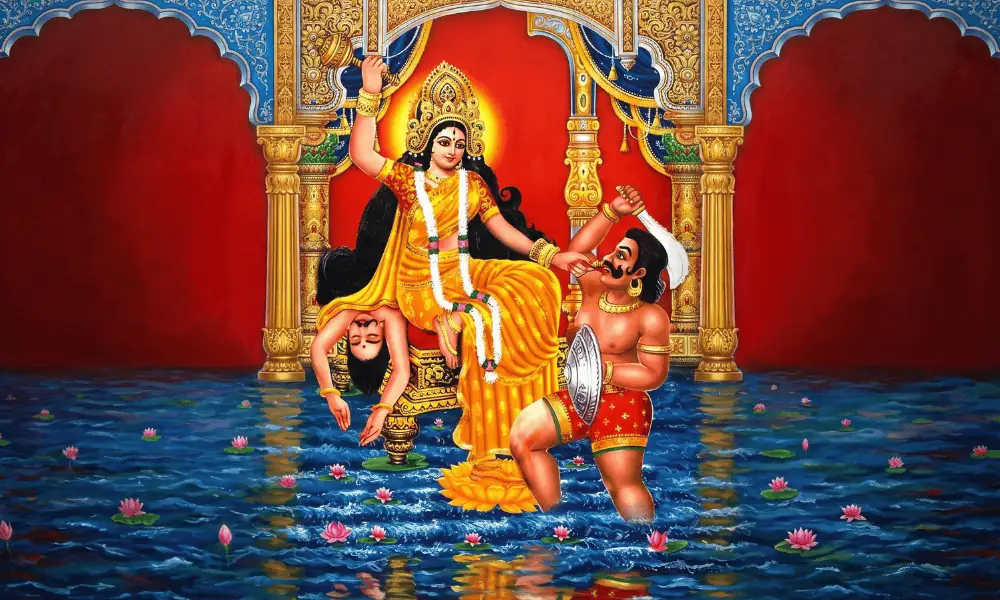
Traditional depictions of Maa Baglamukhi commonly show her wearing yellow garments and holding a mace while grasping the tongue of a subdued figure.
She is traditionally described as shining with a golden hue:
Yellow Garments: Yellow and saffron (the Pitambara aspect) dominate her depictions, traditionally associated with purity and focus.
The Mace or Club: She is depicted holding a club (Mudgara), symbolizing the traditional attribute used to dispel ignorance and obstacles.
The Tongue and Subdued Figure: She is frequently shown subduing a figure while holding the tongue, which is traditionally interpreted as a symbol representing the restraint of untruth, gossip, and uncontrolled speech.
Traditional Narratives
In traditional Shakta texts and mythological literature, Goddess Baglamukhi is frequently invoked in narratives concerning the restoration of cosmic order during times of severe imbalance.
These traditional accounts are sacred religious narratives rather than chronological history.
They serve within the tradition to symbolize the sudden, decisive intervention of divine truth and stability when chaos threatens to overwhelm creation.
Worship of Maa Baglamukhi
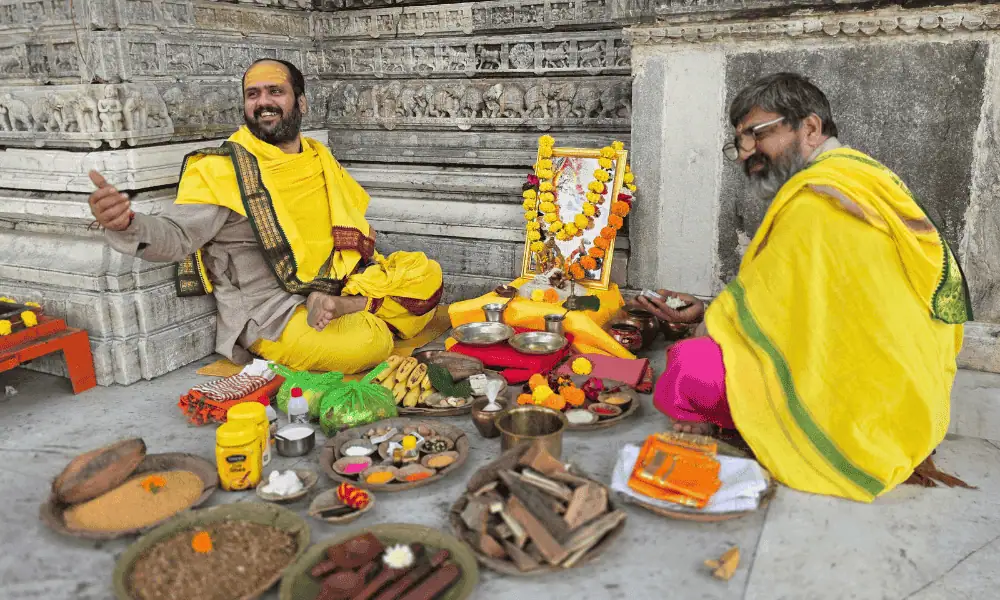
Maa Baglamukhi worship is approached with respect, sincerity, and discipline. The form of practice may range from simple personal prayer to more formal ritual observances.
Devotees generally engage in worship with a calm mind, observing personal cleanliness and approaching the practice with sincerity and attention.
The traditional emphasis is placed on inner focus and adherence to established guidelines rather than any guarantee of specific external results.

When Is Maa Baglamukhi Worshipped?
Timing plays a significant role in traditional observances associated with the Goddess, spanning regular daily practices as well as broader calendar cycles:
Daily Practice: Personal prayer, meditation, and recitation are often conducted during quiet hours such as Early Morning or Evening.
Weekly Days: Some devotional traditions associate Thursday with Maa Baglamukhi worship, while other practices follow individual custom.
Major Festivals & Auspicious Tithis: Observances are held on Baglamukhi Jayanti, during Gupt Navratris, standard Navratris, Amavasyas, and other auspicious Tithis according to the Hindu calendar.
Traditional Offerings to Maa Baglamukhi
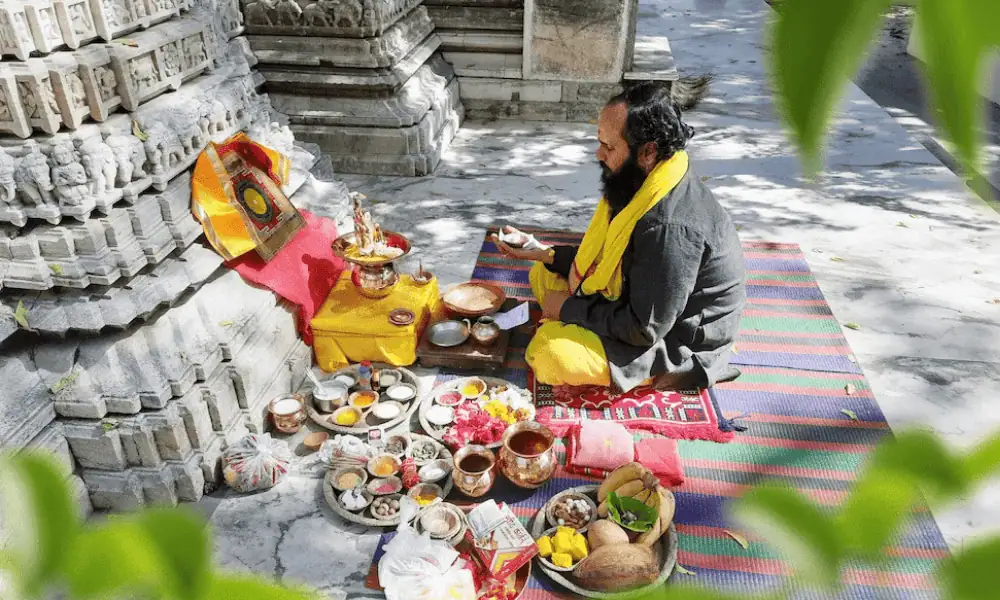
Traditional offerings associated with the worship of Maa Baglamukhi reflect the color symbolism and ritual requirements of her tradition:
Flowers: Fresh yellow flowers such as marigolds.
Sweets: Yellow-colored traditional sweets or preparations.
Cloth: Yellow or saffron-colored fabrics used in altar arrangements.
Lamps and Incense: Mustard oil lamps (sarson ke tel ka diya) alongside traditional ghee/oil lamps and incense are included according to the specific form of worship being followed.
Can Maa Baglamukhi Be Worshipped at Home?
Yes. Maa Baglamukhi can be worshipped at home through simple devotional practices such as prayer, reading the Chalisa, or Aarti.
For a more detailed approach, see our guide to Worshipping Maa Baglamukhi at home.
Maa Baglamukhi Mantra
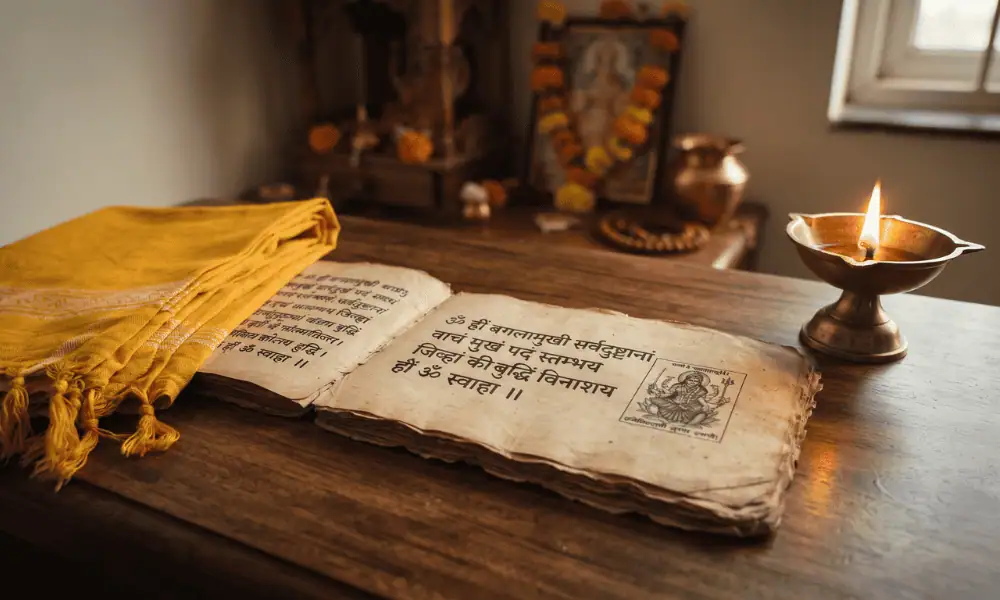
The chanting of sacred syllables forms a core part of traditional practice.
Proper pronunciation, mental clarity, and reverence are observed by practitioners as they engage with sacred text.
To explore traditional texts, syllable guides, and deeper contextual insights, visit the Baglamukhi Mantra page.
Maa Baglamukhi Chalisa
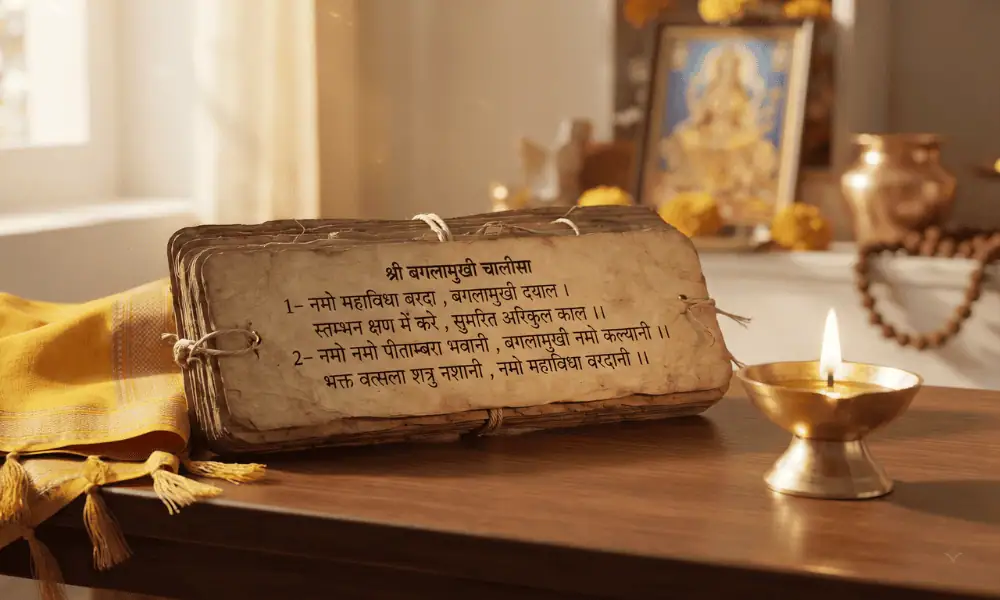
The Baglamukhi Chalisa is a devotional hymn through which devotees express reverence, seek protection, and cultivate remembrance of Maa Baglamukhi.
Read the complete verses and gain a deeper appreciation of the hymn on the Baglamukhi Chalisa page.
Maa Baglamukhi Aarti
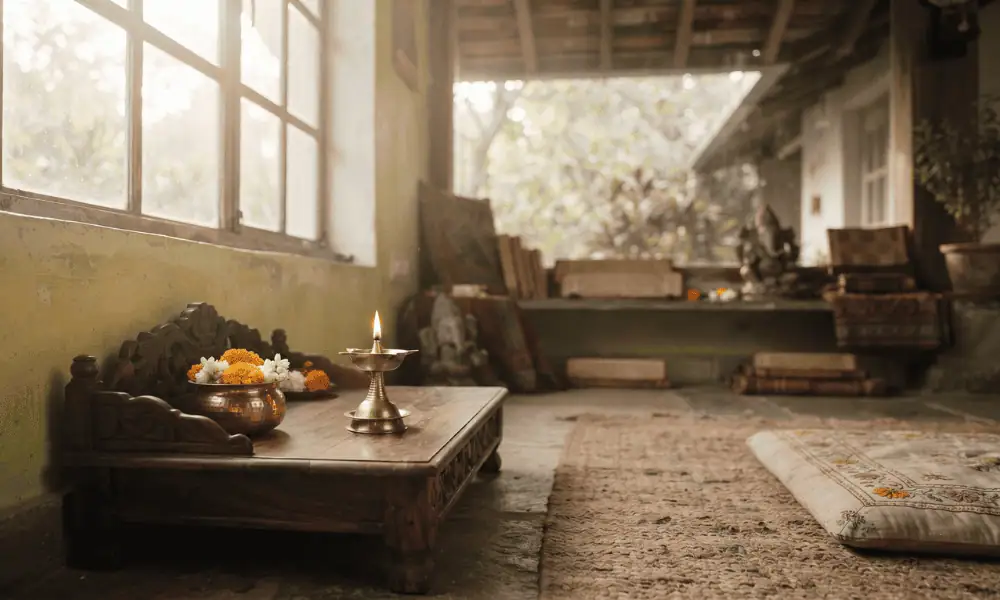
Baglamukhi Aarti is a devotional prayer that may be included in personal or formal worship to conclude rituals with expressions of light and reverence.
For those looking to follow along or incorporate it into their routine, explore the lyrics and a guide on the Baglamukhi Aarti page.
Maa Baglamukhi Puja
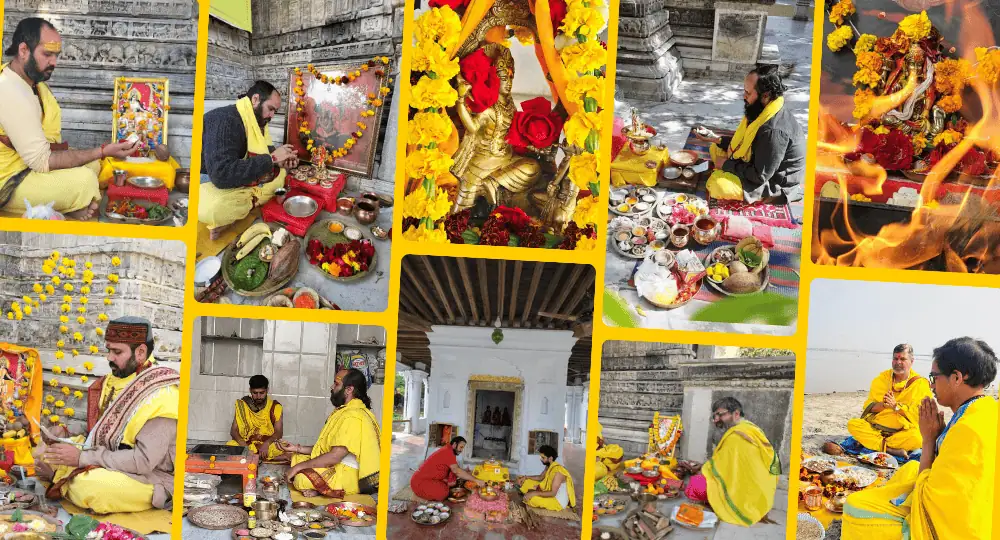
For devotees who are unable to visit a temple or participate in a traditional ceremony in person, online Puja services may provide a way to participate through a guided Sankalp and remote ritual conducted by priests.
Learn more about traditional services through the Puja Information Hub.
Frequently Asked Questions About Maa Baglamukhi
Basic devotional practices such as prayer, reading the Chalisa, Aarti, or simple forms of worship may be followed by householders according to their tradition. More intensive mantra sadhana and formal ritual practices are traditionally undertaken with appropriate guidance.
No. Traditional worship is approached as a practice of devotion, discipline, and inner purification rather than as a guaranteed means of achieving a specific material outcome.
Yellow and saffron are traditionally associated with Maa Baglamukhi and her form as Pitambara. These colors are prominent in her iconography and in various forms of devotional worship.
Baglamukhi Jayanti is traditionally observed on Vaishakha Shukla Ashtami according to the Hindu lunar calendar. Devotees may observe the occasion through prayer, mantra recitation, Chalisa, Aarti, Puja, or other devotional practices according to their tradition.
Explore more about Maa Baglamukhi and her devotional traditions on Baglamukhi Guru