
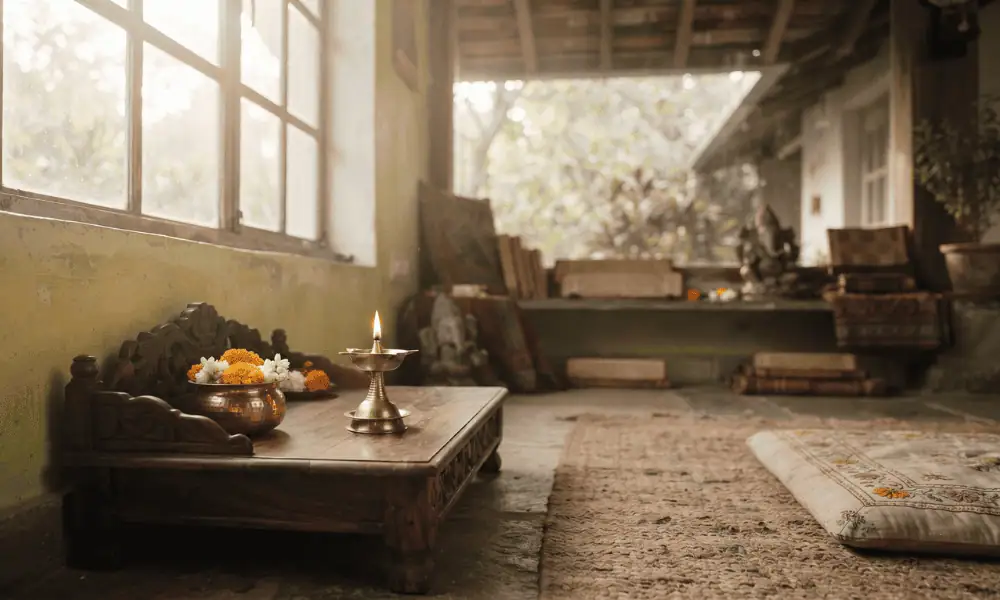
Maa Baglamukhi can be worshipped at home through simple devotional practices performed with sincerity, cleanliness, and devotion. A devotee may offer prayers, light a diya, offer flowers, recite the Maa Baglamukhi Mantra, read the Baglamukhi Chalisa, or perform Aarti according to their personal practice.
For those who wish to perform a more structured worship, a simple Baglamukhi Puja Vidhi at home can be followed without making the practice unnecessarily complicated.
Can Maa Baglamukhi Be Worshipped at Home?
Yes. Maa Baglamukhi can be worshipped at home as part of a personal devotional practice.
A clean and peaceful place can be used for worship. Devotees may keep a picture or murti of Maa Baglamukhi, offer simple devotional items, and spend time in prayer and meditation.
Home worship can be as simple as offering a prayer and remembering Maa Baglamukhi with devotion. More elaborate pujas, anushthans, or havans may involve additional procedures and, depending on the tradition and practice, may be undertaken with appropriate guidance.
How to Perform Baglamukhi Puja at Home
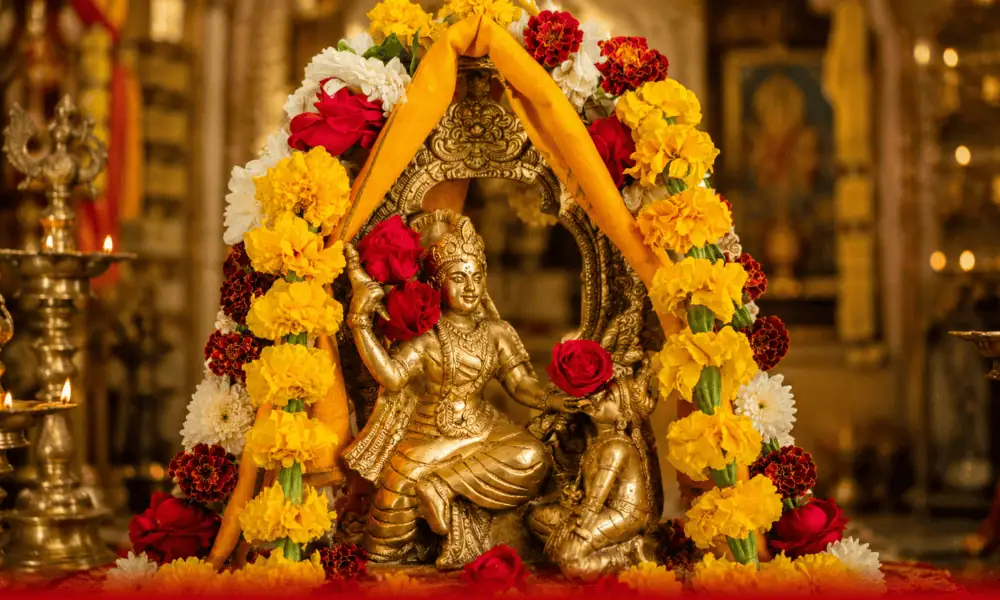
A simple home puja can be performed by following a few basic steps. The exact customs may vary according to family tradition, sampradaya, and personal practice.
1. Prepare a Clean Worship Space
Choose a clean and peaceful area of your home for the puja. Clean the space and arrange the items you intend to use before beginning.
A dedicated place for daily prayer can help create a calm atmosphere for worship.
2. Place an Image or Murti of Maa Baglamukhi
You may place a picture or suitable murti of Maa Baglamukhi in your worship space.
The important part of home worship is approaching Maa with respect and devotion. Keep the worship area clean and treat the image or murti respectfully.
3. Prepare Yourself for Worship
Before beginning the puja, bathe or wash your hands, feet, and face and wear clean clothes.
Take a few moments to become calm and focused. Set aside distractions and approach the worship with a sincere mind.
4. Light a Diya
Light a diya as part of your worship. You may also light incense if it is part of your regular devotional practice.
The diya represents light and is traditionally used during Hindu worship.
5. Make Your Sankalp or Prayer
Before beginning the main worship, take a moment to express your intention.
You can make a simple personal prayer in your own words. If you have a specific intention or wish, you may respectfully place it before Maa Baglamukhi.
A sincere prayer does not need to be complicated.
6. Offer Flowers and Other Devotional Items
Offer flowers and other simple items according to your family or devotional tradition.
Yellow is traditionally associated with Maa Baglamukhi, so yellow flowers or other suitable yellow offerings may be used when available.
The offering should be made respectfully rather than focusing only on the quantity or variety of items.
7. Recite a Maa Baglamukhi Mantra
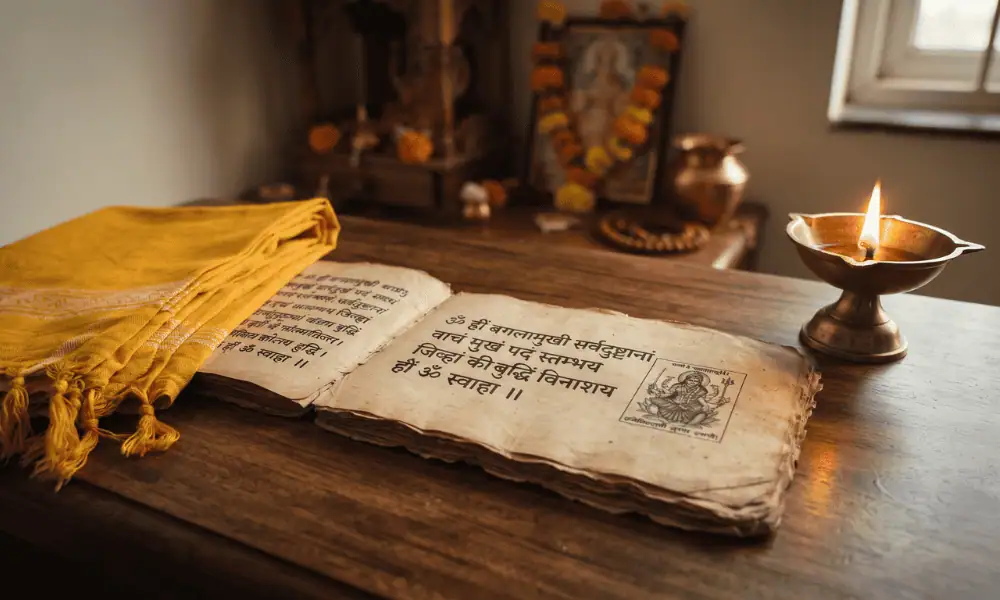
If you have a mantra practice, you may recite an appropriate Maa Baglamukhi mantra during your worship.
For detailed information about Maa Baglamukhi mantras, their meaning, and traditional practice, see our Maa Baglamukhi Mantra guide.
If you are new to mantra practice, it is sensible to understand the particular mantra and its traditional method of practice rather than beginning an elaborate discipline without guidance.
8. Read the Baglamukhi Chalisa
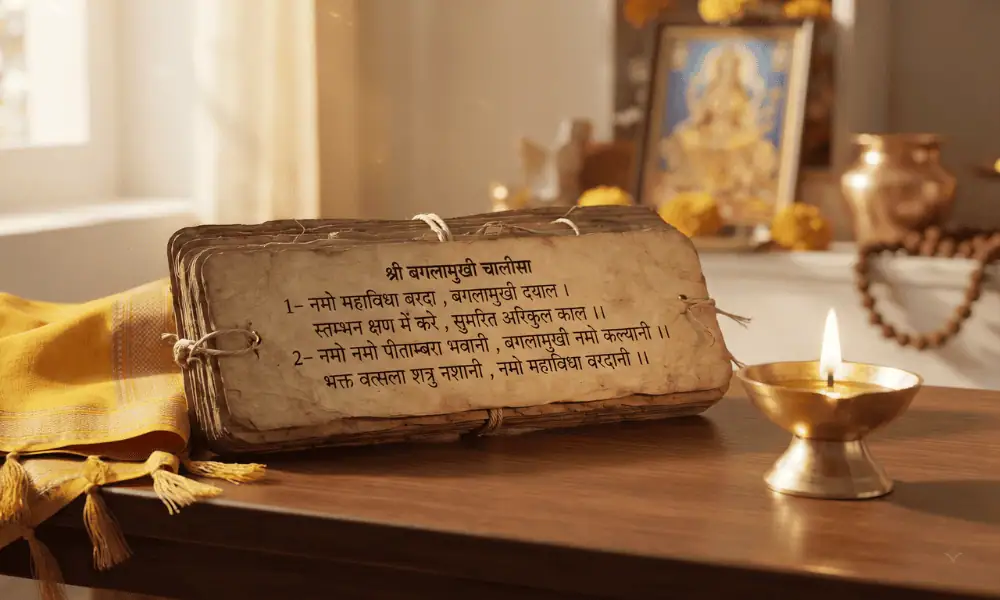
Reading the Maa Baglamukhi Chalisa can be a simple devotional practice at home.
You can include the Chalisa as part of your regular worship or read it separately as a way of remembering Maa Baglamukhi.
Read the complete Maa Baglamukhi Chalisa with attention and devotion.
9. Perform Aarti
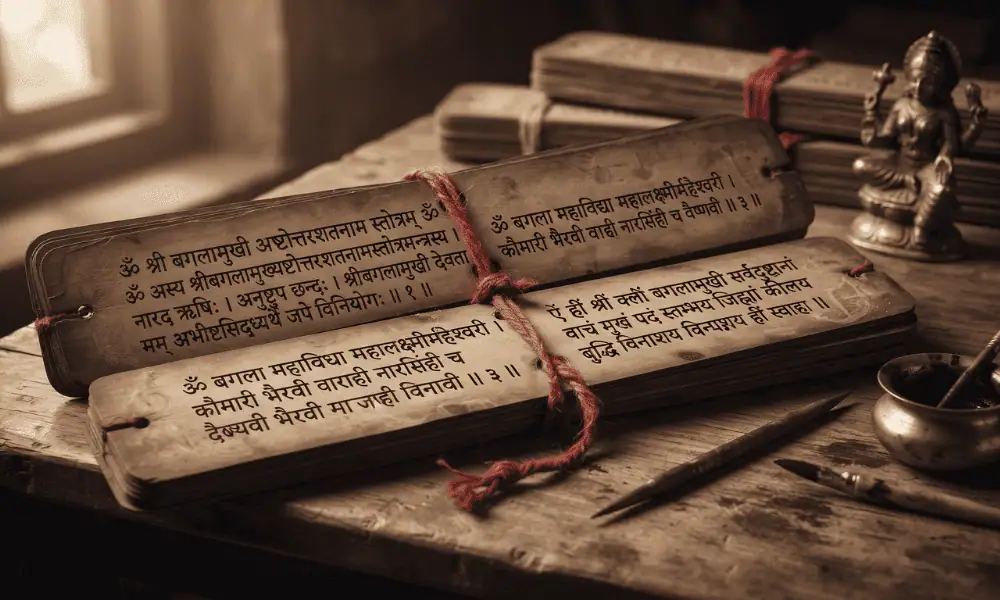
If Aarti is part of your worship practice, you may conclude the puja by performing Maa Baglamukhi Aarti.
Aarti provides a simple way to complete the devotional portion of the worship and offer your prayers to Maa.
You can learn more through our Maa Baglamukhi Aarti page.
10. Offer Your Final Prayer
After completing the puja, sit quietly for a moment and offer your final prayer.
You may express gratitude to Maa Baglamukhi and respectfully conclude the worship.
Baglamukhi Puja Vidhi at Home
The basic Baglamukhi Puja Vidhi at home can therefore be understood as a simple sequence:
Clean the worship space → prepare yourself → place Maa Baglamukhi’s image or murti → light a diya → make your Sankalp or prayer → offer flowers and devotional items → recite your chosen prayer or mantra → read the Chalisa or perform Aarti → offer your final prayer.
This simple approach is suitable for personal devotional worship. Specific traditional puja procedures can vary, so there is no need to treat every home worship practice as identical.
Can You Keep Maa Baglamukhi’s Photo or Idol at Home?
Many devotees keep images or murtis of Maa Baglamukhi in their home worship spaces.
If you choose to keep a picture or murti, place it respectfully in a clean area used for prayer. Keep the surrounding space clean and approach the image or murti as an object of devotion.
The form, placement, and worship customs may differ according to individual traditions.
What Can You Offer Maa Baglamukhi During Home Puja?
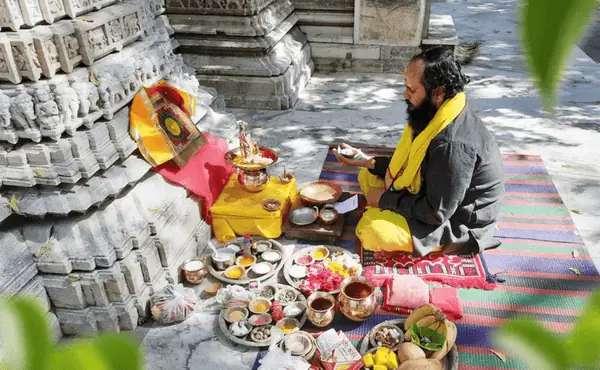
Simple devotional offerings may include:
- Flowers, including yellow flowers
- A diya
- Incense, according to your practice
- Water
- Fruits or other suitable offerings
- Prayers and devotional recitations
You do not need a large collection of items to begin simple home worship. Sincerity, cleanliness, and respectful devotion are central to personal prayer.
Maa Baglamukhi Mantra for Home Worship
Mantra recitation is an important part of worship for many devotees of Maa Baglamukhi.
However, different mantras and forms of practice can have different traditional procedures. For ordinary devotional worship, choose a practice that is appropriate for you and follow the instructions of your tradition or qualified teacher where guidance is needed.
For a detailed explanation of Maa Baglamukhi mantras, visit our Maa Baglamukhi Mantra guide.
Can Beginners Perform Baglamukhi Puja at Home?
Yes. Beginners can begin with simple devotional practices such as prayer, offering a diya and flowers, reading the Chalisa, or performing Aarti.
There is no need to begin with a complicated ritual simply because you are new to Maa Baglamukhi worship.
If you want to undertake a more elaborate mantra discipline, anushthan, or specialized ritual practice, learning the appropriate procedure from a knowledgeable source or qualified teacher can be helpful.
Can Baglamukhi Havan Be Performed at Home?
Baglamukhi Havan is a more elaborate form of worship than simple daily prayer.
A Havan involves additional preparations, samagri, mantras, fire-related procedures, and a defined ritual method. If you are considering performing a formal Baglamukhi Havan at home, follow an appropriate traditional procedure and take guidance where necessary.
For more information about Baglamukhi Havan and its traditional context, see our Baglamukhi Havan guide.
Simple Home Worship vs. Formal Baglamukhi Puja
It is useful to distinguish between personal devotional worship and a formal puja.
Simple home worship may include:
- Prayer
- Lighting a diya
- Offering flowers
- Reading the Chalisa
- Performing Aarti
- Personal devotional mantra practice
A formal Baglamukhi Puja or Havan may involve a more detailed sequence of rituals, specific mantras, samagri, Sankalp, and other traditional procedures.
Both can have their own place in devotional practice. The appropriate approach depends on what the devotee wishes to undertake and the tradition they follow.
How Often Can You Worship Maa Baglamukhi at Home?
There is no need to make home worship unnecessarily complicated. Some devotees may choose to pray daily, while others may worship on particular days or occasions.
What matters is maintaining a respectful and sincere devotional practice that fits your circumstances and tradition.
You can also include the Baglamukhi Chalisa or Aarti in your regular prayer routine.
When to Consider a Formal Baglamukhi Puja
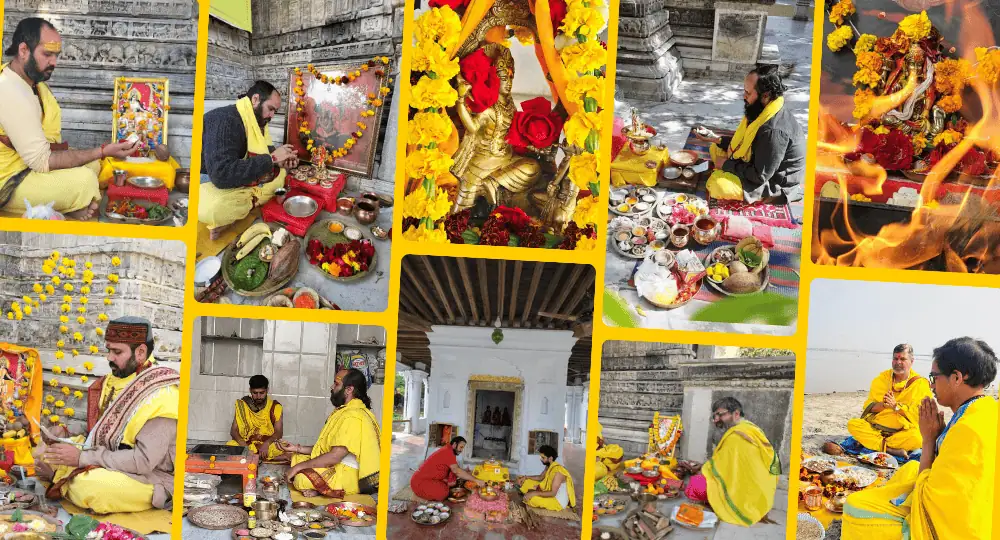
If you would like a more structured or personalized Baglamukhi Puja performed according to a traditional ritual format, you may consider arranging a formal puja rather than attempting an elaborate ceremony yourself.
A personalized puja can include a Sankalp made with the devotee’s details and specific prayer intention.
Explore Baglamukhi Puja options and online booking.
Frequently Asked Questions
Yes. Maa Baglamukhi can be worshipped at home through simple devotional practices such as prayer, offering flowers and a diya, reading the Chalisa, performing Aarti, and appropriate mantra practice.
Devotees may keep a picture of Maa Baglamukhi in a clean and respectful home worship space. Follow the customs of your family or spiritual tradition regarding placement and worship.
A murti can be kept respectfully in a suitable worship space. If you intend to establish and formally worship a consecrated murti, follow the appropriate traditional procedures.
A simple home puja can include preparing a clean worship space, placing Maa Baglamukhi’s image or murti, lighting a diya, making a prayer or Sankalp, offering flowers, reciting appropriate prayers or mantras, reading the Chalisa or performing Aarti, and concluding with a final prayer.
Beginners can start with simple devotional worship. More elaborate ritual practices may require learning the appropriate traditional procedure and seeking guidance when needed.
A Havan is more elaborate than simple home worship. It involves fire rituals, mantras, samagri, and a specific procedure, so those undertaking a formal Havan should follow an appropriate traditional method and seek guidance where necessary.
Yes. Reading the Baglamukhi Chalisa can be included as part of personal devotional worship at home.
Yes. Aarti can be included in home worship as a devotional practice and may be performed according to your family’s or spiritual tradition’s customs.
A Simple Way to Begin
Worship of Maa Baglamukhi at home does not have to begin with an elaborate ceremony. You can start by creating a clean place for prayer, approaching Maa with sincerity, offering a diya and flowers, and spending a few peaceful moments in prayer.
As your devotional practice develops, you can learn more about the Maa Baglamukhi Mantra, Chalisa, Aarti, Puja, and Havan and choose practices that are appropriate for your tradition.