
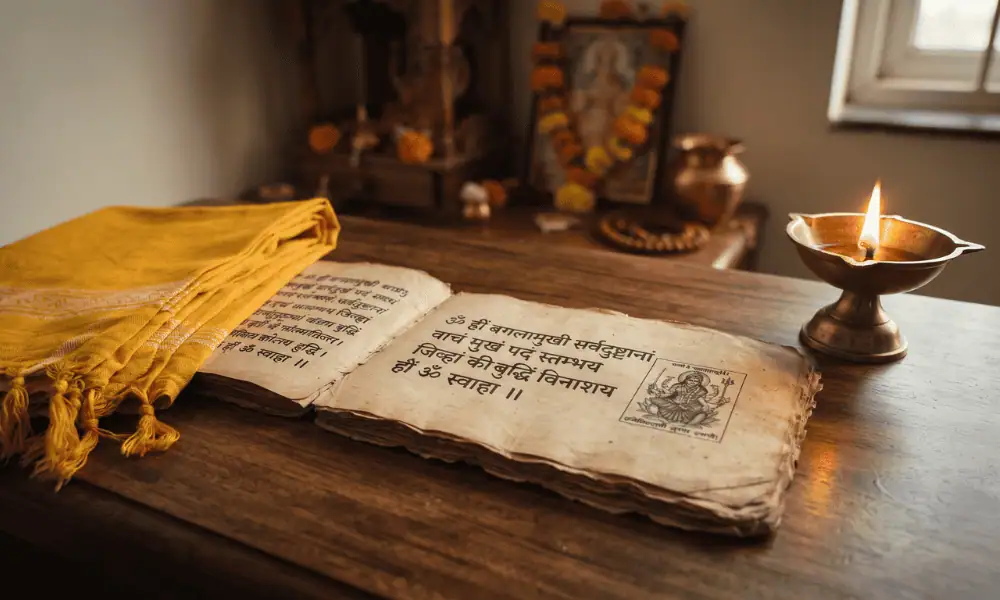
Maa Baglamukhi Mantra
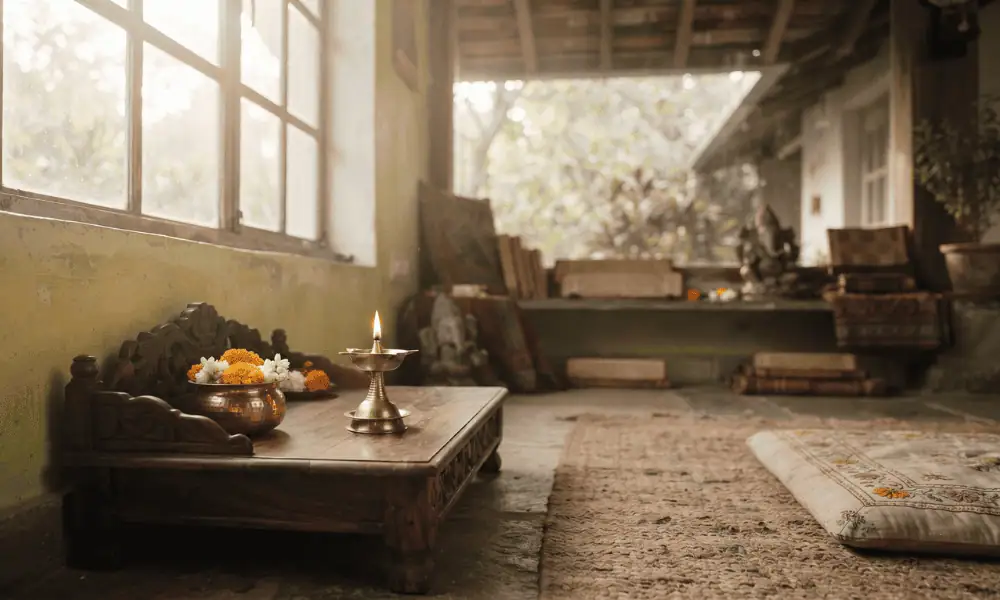
Maa Baglamukhi Mantra — Full Text
Maa Baglamukhi Mantra in Hindi
ॐ ह्लीं बगलामुखी सर्व दुष्टानाम वाचं मुखं पदं स्तम्भय जिह्वां कीलय बुद्धिं विनाशय ह्लीं ॐ स्वाहा॥
Maa Baglamukhi Mantra in English
Meaning of Maa Baglamukhi Mantra
Om Hleem
The primordial cosmic sound combined with the primary seed syllable of Baglamukhi, representing her binding and stabilizing power.
Baglamukhi
Addressing the Goddess directly by her divine name.
Sarva Dushtanaam
"Of all malevolent forces, negative influences, or inner/outer obstacles..." (In esoteric practice, dushta also refers to the internal enemies of greed, anger, and delusion).
Vaacham Mukham Padam Stambhaya
"...bridle or halt their speech, mouths, and movements" (representing the stopping of harmful communication, chaotic spread of falsehood, or reactive speech).
Jihvaan Keelaya
"Nail down or immobilize the tongue" (symbolically locking away untruth, malice, and harsh rhetoric).
Buddhim Vinashaya
"Destroy [or clear away] corrupted, toxic, or confused intellect." Hleem Om Swaha: The sealing syllables of offering and transformation.

How to Approach Maa Baglamukhi Mantra
Correct Pronunciation (Uchcharan): Full mantras require exact phonetic articulation. Mispronouncing sacred syllables alters the internal resonance. If you are learning a long mantra, listen closely to traditional audio recordings or learn directly from a qualified guide before attempting high-count repetition.
Mental Synchronization: Do not rush through the words like a checklist. Each phrase has a visualization attached to it—imagining the golden light of the Goddess neutralizing mental fog and stabilizing your focus.
Establishing a Baseline Count: Typically, the full maa baglamukhi mantra is chanted in multiples of traditional rounds (using a turmeric or rudraksha mala, commonly counted in cycles of 108). Consistency—such as completing 1 or 2 malas daily at the exact same hour—matters far more than doing massive numbers sporadically.
Maintaining Inner Cleanliness: The full mantra is considered potent. Sincere practitioners maintain physical cleanliness, a calm environment, and an attitude free of malice when engaging with it. Approaching the text with a desire to dominate or harm others violates the foundational code of Mahavidya Sadhana.
A Grounded Perspective on Practice
In modern spiritual spaces, people often hunt for the “longest” or “most secret” maa baglamukhi mantra believing it carries a magical shortcut. In reality, a full mantra is simply a heavier instrument. Just as you would not pick up a heavy industrial tool without knowing how to use it, this practice should be approached with patience, respect, and a clear understanding that its true purpose is to quiet the internal storm and anchor you in absolute truth.
Baglamukhi Mantra - FAQ's
Most practitioners start with one mala (108 repetitions) daily. Consistency, correct pronunciation, and focus matter far more than high numbers.
Yes, you can chant at home in a quiet, clean space with a focused and respectful mindset.
Basic devotional chanting can be done by sincere seekers. However, intensive, long-term ritual practices or high-count sadhanas benefit greatly from traditional guidance.
Esoterically, it means stabilization or pausing—specifically halting mental turbulence, reactive speech, and inner confusion.
It is customary to wear clean, comfortable clothes—traditionally yellow or white, as yellow is sacred to Goddess Baglamukhi —and keep a lit brass diya or a rudraksha mala in your sacred space to maintain a focused atmosphere.
Explore More About Maa Baglamukhi
-
Baglamukhi?
Explore Baglamukhi & her traditional worship -
Who Is Maa Baglamukhi?
Learn about her significance and traditional worship. -
Baglamukhi Puja
Explore traditional Puja and Havan. -
Baglamukhi Aarti
Read and learn about the traditional Baglamukhi Aarti. -
Baglamukhi Chalisa
Explore the Baglamukhi Chalisa and its devotional significance.