
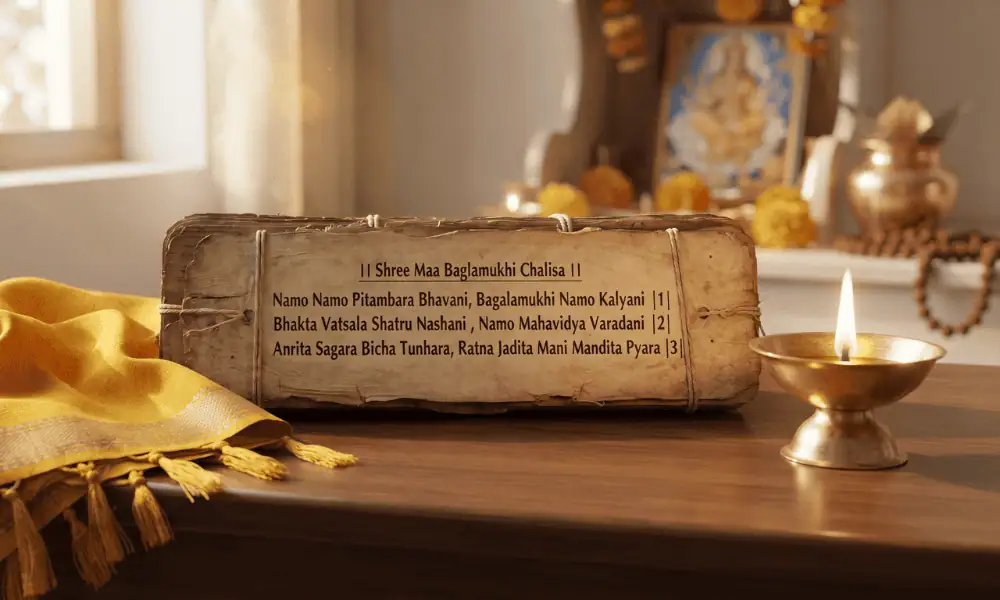
Baglamukhi Chalisa: Meaning, Benefits & How to Recite
The Baglamukhi Chalisa is a devotional prayer dedicated to Maa Baglamukhi, one of the Ten Mahavidyas. Devotees recite the Chalisa as a form of prayer, remembrance and devotion, often with a personal Sankalp or spiritual intention.
The Chalisa offers devotees a way to regularly focus their thoughts and prayers on Maa Baglamukhi. For those looking for the complete text, you can read the complete Baglamukhi Chalisa here.
In this guide, we explore the significance of Baglamukhi Chalisa, its traditional benefits, how it may be recited, and some common questions devotees have about this devotional practice.
Baglamukhi Chalisa: Meaning, Benefits & How to Recite
A Chalisa is a devotional composition traditionally consisting of forty verses or chaupais dedicated to a particular deity. The Baglamukhi Chalisa is devoted to Maa Baglamukhi and describes her divine form, qualities and significance in devotional worship.
Reciting a Chalisa is generally understood as an act of devotion and remembrance. It can become part of a person’s regular prayer practice, allowing them to spend time in focused contemplation and prayer.
If you are looking for the complete text, including the verses of the Chalisa, visit our dedicated Baglamukhi Chalisa page.
What Is the Significance of Baglamukhi Chalisa?
Maa Baglamukhi is traditionally revered among the Ten Mahavidyas. Her worship is associated with stillness, steadiness, focused awareness and strength.
For devotees, reciting her Chalisa can be a way of expressing faith and turning their attention toward the Divine Mother. The practice may also provide a regular structure for prayer and personal reflection.
The significance of the Chalisa is therefore not limited to the words themselves. For many devotees, the manner in which it is approached — with sincerity, concentration and devotion — is an important part of the practice.
Traditional Benefits of Reciting Baglamukhi Chalisa
Searches for “Baglamukhi Chalisa benefits” and “Baglamukhi Chalisa ke fayde” are common, but traditional descriptions of spiritual benefits should not be understood as guaranteed results.
Devotees traditionally associate regular devotional recitation with several spiritual and personal intentions.
1. Focused Prayer
Reciting the Chalisa gives a devotee a structured form of prayer and remembrance. Repeating the verses can help bring attention back to the chosen spiritual practice.
2. Inner Steadiness
Maa Baglamukhi is traditionally associated with stillness and focused awareness. Devotees may approach her worship while seeking greater steadiness during difficult or uncertain circumstances.
3. Courage and Strength
Some devotees recite the Chalisa as part of a prayer for inner strength and courage when facing challenges.
4. Devotional Discipline
Regular recitation can become part of a consistent spiritual routine. Setting aside time for prayer may help a devotee maintain continuity in their devotional practice.
5. Personal Sankalp
The Chalisa may also be recited with a sincere personal intention or Sankalp. The nature of that intention can be different for every devotee.
These are traditional devotional understandings, rather than promises of a particular material or external outcome.
How to Recite Baglamukhi Chalisa
There is no need to make the practice unnecessarily complicated. A devotee can approach the Chalisa with cleanliness, respect and a focused mind.
A simple approach is:
- Choose a clean and peaceful place for prayer.
- Begin with a respectful prayer to Maa Baglamukhi.
- Keep your personal intention or Sankalp in mind.
- Recite the Baglamukhi Chalisa with attention and devotion.
- Complete your prayer according to your usual spiritual practice.
- Try to maintain regularity if you wish to make the Chalisa part of your daily or periodic worship.
The exact routine may vary according to a person’s tradition, family practice or guidance from a knowledgeable teacher.
Can Beginners Recite Baglamukhi Chalisa?
Yes, a person who is beginning devotional practice may start by learning the Chalisa and understanding its meaning.
If the Sanskrit or Hindi verses are unfamiliar, reading a transliteration or translation can help with understanding. The important point is to approach the prayer respectfully rather than treating it simply as a formula for obtaining a guaranteed result.
Those following a particular spiritual tradition or receiving guidance from a Guru should follow the practices appropriate to that tradition.
Baglamukhi Chalisa in Hindi
Many devotees specifically search for Baglamukhi Chalisa in Hindi, Baglamukhi Chalisa Hindi, or Maa Baglamukhi Chalisa in Hindi.
The language in which a devotee reads a devotional text can make it easier to understand and connect with its meaning. If you are looking for the complete Baglamukhi Chalisa, including the text, visit our dedicated Baglamukhi Chalisa page.
Baglamukhi Chalisa in English
Devotees who are more comfortable with English may also look for an English version or transliteration of the Chalisa.
An English explanation can help with understanding the meaning and devotional context, while the original verses preserve the traditional form of the prayer.
When studying the Chalisa, it can be useful to read the original text alongside its meaning rather than relying only on a translated version.
Baglamukhi Chalisa vs Mantra, Aarti and Stotram
Baglamukhi worship includes several forms of devotional recitation. Although they are related, they are not the same practice.
Explore More About Baglamukhi Chalisa
-
Baglamukhi Chalisa
A devotional composition traditionally structured as forty verses, recited as a form of prayer and remembrance.
Read the Baglamukhi Chalisa → -
Baglamukhi Mantra
A sacred mantra associated with Maa Baglamukhi and used within mantra-based devotional practices.
Learn about Maa Baglamukhi Mantra → -
Baglamukhi Aarti
A devotional prayer performed as an offering of light and devotion to Maa Baglamukhi.
Read Baglamukhi Aarti → -
Baglamukhi Stotram
A devotional hymn praising Maa Baglamukhi. Stotram and Chalisa are distinct forms of devotional composition.
Read Baglamukhi Stotram → -
108 Names of Baglamukhi
The 108 Names page focuses on the sacred names of Maa Baglamukhi and their meanings rather than presenting a Chalisa.
Explore the 108 Names of Baglamukhi →
How Often Can Baglamukhi Chalisa Be Recited?
The frequency of recitation can depend on an individual’s devotional practice and tradition.
Some devotees may include the Chalisa in their daily prayers, while others may recite it on particular days or occasions. There is no need to approach devotional recitation as a race or simply count repetitions without attention.
A sincere and focused approach to prayer is more important than rushing through the verses.
Can Baglamukhi Chalisa Be Recited During a Personal Sankalp?
A devotee may include the Chalisa within their broader devotional practice while holding a personal intention or Sankalp.
A Sankalp is a personal resolve or intention expressed before undertaking a spiritual practice. The intention can relate to one’s personal circumstances, spiritual discipline or prayer.
The Chalisa itself should not be presented as a guarantee that a particular Sankalp will produce a specific outcome.
Where Can I Read the Complete Baglamukhi Chalisa?
If you are looking for the complete Baglamukhi Chalisa, including the full devotional text, visit our dedicated resource:
Read the Complete Baglamukhi Chalisa →
Our main Chalisa page is intended as the primary resource for the text, while this article explains its significance, traditional practice and commonly searched questions.
FAQs about Baglamukhi Chalisa
Baglamukhi Chalisa is a devotional prayer dedicated to Maa Baglamukhi. It is traditionally recited as an expression of devotion, remembrance and prayer.
Traditional devotional understanding associates its recitation with focused prayer, inner steadiness, courage and devotional discipline. These should be understood as spiritual or devotional intentions, not guaranteed outcomes.
Some devotees include the Chalisa in their daily prayer routine. The appropriate frequency can depend on individual practice and tradition.
Yes. Beginners can start by learning the verses and understanding their meaning, while following any specific guidance from their spiritual tradition or teacher.
You can read the complete Baglamukhi Chalisa here.
No. The Chalisa and Mantra are different forms of devotional practice. The Chalisa is a devotional composition, while a mantra is a sacred formula used in mantra-based worship.
The Baglamukhi Chalisa can be approached as a regular devotional practice — with attention, respect and a sincere intention.
Whether you are discovering Maa Baglamukhi worship for the first time or already include the Chalisa in your prayers, understanding the meaning and context of the verses can make the practice more meaningful.